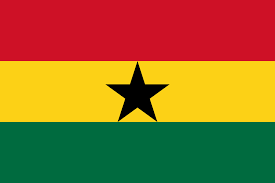
The Empire of Ghana
The Empire of Ghana formed in 300AD when different tribes of the Soninke people were united under the first king, Dinga Cisse. The Soninke people used the word ‘Ghana’, meaning ‘Warrior King’ to refer to the king, and the Empire’s enemies and allies subsequently began to refer to the region as ‘Ghana’. The Empire was actually located northwest of present-day Ghana, in what is now Mauritania, Senegal and Mali, but was gradually driven towards the coast by attacks from tribal groups in northern Africa who wanted the Empire to convert to Islam. From 1100AD the Empire weakened, until it was eventually incorporated into the Mali Empire. An era of trade In 1471, Portuguese traders landed in modern-day Ghana and noticed that many of the people who lived there were wearing gold jewellery. This ushered in a new era of trade in gold, ivory and timber between Ghana, the Portuguese, Dutch, British, and various neighbouring Akan states, leading to Ghana becoming rich and powerful. Today, you can still see some of the many forts and castles which the Europeans constructed along the Ghanaian coast to protect their trade interests. In the 1500s, the focus shifted to trading in slaves, and slavery overtook gold as the main export. With the arrival of Dutch, English, Danish and Swedish settlers during the 1600s, the slave trade became highly organised. Forts such as Cape Coast Castle (which you can visit during your trip) were used to hold slaves awaiting transport to the Americas, and millions of West Africans were captured and forcibly transported across the oceans.